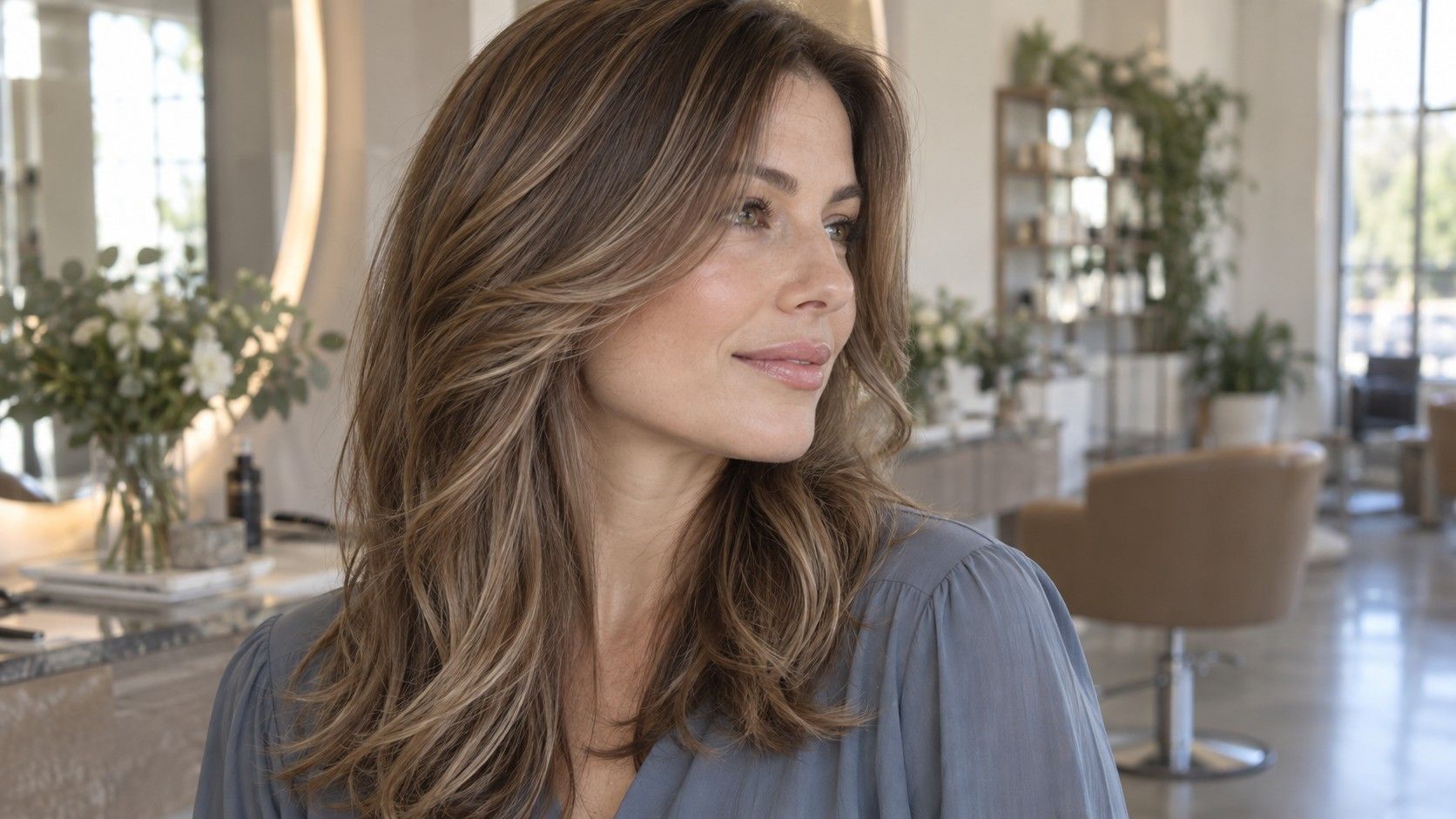
A search for soft summer hair color can lead from a pleasing mushroom-brown photograph to a much less useful instruction: make everything ashier. That skips the decisions that shape the result. How dark should the hair remain? How much variation do you want around the face? Will the reference work with your starting color and the upkeep you are willing to accept? I would use Soft Summer as a visual direction toward a quieter finish, then turn it into specific questions before choosing a change.
Decide what you want to keep before choosing a shade
Soft Summer is a seasonal styling label usually associated with muted colors and a cooler or neutral-cool direction. It is not a salon formula, and different practitioners draw its boundaries differently. A person placed in that group does not automatically need ash blonde, nor does naturally darker hair need to be lightened to fit a chart. The label is a starting point for comparisons, not evidence that your current hair is wrong.
Look first at depth: the overall lightness or darkness of your hair beside your face. Put a dark towel and then a medium gray towel around the shoulders in indirect daylight. Keep the hair visible. Notice whether you like a stronger outline or a softer transition. This is an outfit comparison rather than a prediction of a finished hair color, but it can reveal whether the attraction is really to mutedness or to a lighter overall look.
Write down the features you want to retain. You may like the depth of your roots, the lighter ends, or the way a few gray strands interrupt a solid color. Bring those details to a consultation. Existing color, previous treatments, texture, and condition affect what a colorist can reasonably offer, so a photograph alone cannot establish the route or the likely result. A successful plan begins with the hair that is actually there.
Translate ash, beige, and mushroom into visible differences
Hair-color names are slippery. “Ash brown” might describe a subdued neutral brown in one image and a visibly gray finish in another. “Beige blonde” can lean creamy, sandy, or quite cool. Mushroom brown often suggests a muted brown with grayish or taupe-looking variation, but it is not a standardized promise. Two salons can use the same word for noticeably different appearances.
When collecting references, explain the part that appeals to you. Perhaps the roots are medium-depth, the face-framing pieces are only a little lighter, and the overall image has no obvious orange cast. Those observations are more useful than requesting the name in the caption. Include a picture you dislike and say why: too silver, too dark, too striped, or too uniformly beige. A boundary helps as much as an aspiration.
Muted does not mean colorless. A soft brown can retain visible brown, and a quieter blonde can still look warm beside a blue-gray sweater. Making every visible strand grayish may remove a contrast you enjoy. Before deciding that the best hair color for Soft Summer must be the coolest available, compare a neutral-looking reference with a distinctly silvery one. Ask whether you want a subtle temperature adjustment or an obvious silver effect.
Screen images complicate that comparison. Window light, warm indoor bulbs, camera white balance, and editing can change the apparent tone. Favor references showing the same head in several lights over one heavily styled image. A color that looks beige in the shade may read warmer in sunlight; neither image necessarily tells the whole story. Avoid trying to match a single phone-screen swatch as though it were a physical sample.
Choose how much movement and contrast you want
A solid-looking finish and a varied finish create different impressions even when their average depth is similar. Small differences between roots and lengths can give a quiet result some definition. Strong light pieces beside dark roots create a more graphic effect. Neither is automatically incompatible with a seasonal label, but they answer different preferences. Decide how visible you want the pattern to be when the hair is tied back as well as worn loose.
Consider your ordinary styling. If you usually air-dry your hair, an elaborate reference photographed with waves and studio lighting may hide the placement you would see on a normal morning. Find an example with a similar cut and a straightforward finish. Look at the area beside the cheeks, the parting, and the ends separately. Those details can explain why one muted brown seems lively while another feels too uniform.
Your eyebrows and glasses also form part of the contrast around the face. They do not have to match the hair, but a large change in hair depth can alter their relative emphasis. Try a quiet brown fabric or a hairpiece near the face, keeping your usual glasses on. A temporary visual comparison cannot forecast a color service, yet it gives you a low-commitment way to decide whether a very light or dark outline appeals.
Bring a usable conversation to the salon
Choose two or three references rather than an endless gallery. Show the desired depth, the amount of variation, and the temperature you prefer. Say plainly if a photograph is appealing because of its cut or styling rather than its color. A short written description might read: “Keep the overall medium-brown depth, soften the bright pieces, and avoid a visibly silver finish.” That gives a colorist something concrete to discuss.
Describe your color history accurately, including changes that may no longer be obvious. Ask what is achievable in the proposed visit, what may need several appointments, and what the hair might look like between them. Let the professional assess suitability and any product-specific precautions. A seasonal palette cannot replace that assessment, and an online article cannot responsibly provide a chemical recipe for an individual head of hair.
Upkeep deserves the same attention as the initial photograph. Ask how visible the grow-out may be, how the appearance may change over time, and what maintenance the proposed service involves. Request the current appointment cost and the likely maintenance schedule directly from the salon. If that schedule does not fit your budget or routine, ask for an alternative closer to your starting depth. The quieter option may be the one you can comfortably live with.
Make sure you and the colorist mean the same thing by “soft.” It could refer to lower contrast between sections, less obvious warmth, a gentler outline around the face, or simply a less dramatic change. Pick the priority. Asking for all of those at once without discussing the starting point can leave both people interpreting a vague adjective differently.
Check the direction before making a large change
Start by comparing clothing near the hair. A smoky blue sweater, a dusty rose scarf, and a muted brown collar can show whether you enjoy the proposed quieter color family around your face. Keep the room light and the camera position consistent if you take pictures. Do not compare an outdoor image of one option with a filtered indoor image of another and expect the difference to represent hair color alone.
Digital hair previews are useful for rough questions about depth and contrast. They are less reliable for subtle tone, texture, shine, or the result of a particular service. Check whether the preview also changes the skin or lighting; if it does, you are judging more than the hair. Keep your original photograph beside it, and use the preview to formulate a preference rather than as an expected finished result.
If the proposed change still feels uncertain, discuss a smaller step or postpone it. You can keep your current hair and choose softer clothing around it. A Soft Summer label does not create an obligation to color hair, cover gray, or reduce every warm reflection. The useful outcome is a clear description of the effect you want, an achievable professional plan if you choose one, and a level of maintenance you have knowingly accepted.